
A mindful productivity app for focus.
- Project Type:
- Academic
- My Role:
- Product Designer & Front-End Developer
- Team:
- Maritza Yam, developer
- Project Timeline:
- 4 days
- Project Stack:
- Figma, Android Studio, Kotlin, Notion, mermaid
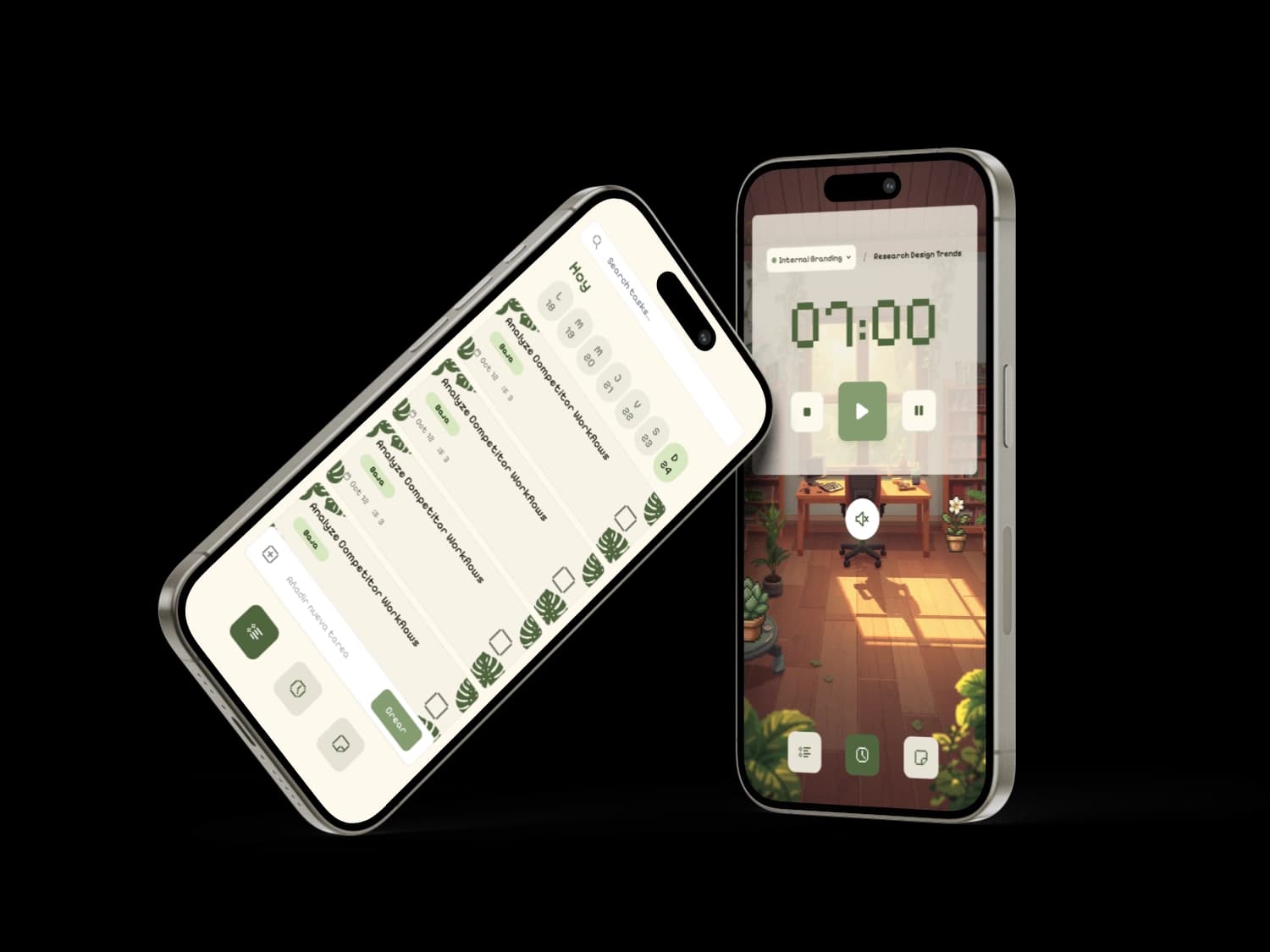
Neki
Neki is a productivity and focus app designed to help people turn intention into action. Through research on productivity habits, attention challenges, and task management behaviors, I discovered that many of the difficulties commonly associated with ADHD such as procrastination, task avoidance, and abandoning productivity tools are also experienced by neurotypical users, although often to a lesser degree. Neki was created as an inclusive solution that combines task management and focused work sessions within a calm, intentional experience that helps users stay organized without feeling overwhelmed.
Problem
Stack
User Goals
Complete daily tasks without feeling cognitively overloaded by the tool itself. Capture new tasks quickly, in under five seconds, without navigating multiple screens. Use a Pomodoro timer that is integrated directly with tasks, removing the need to juggle separate apps. Maintain a clear view of what needs to be done today without being confronted by a backlog that triggers avoidance. Feel a sense of genuine progress when tasks are completed not just a checkbox, but an acknowledgment. Build a reliable organizational routine that sustains itself beyond the initial novelty period.
Business Goals
Achieve a measurable improvement in daily active use retention compared to typical to-do list applications, where abandonment rates are highest in the first two weeks. Establish Neki as a trusted productivity tool within the neurodivergent and student communities through honest, empathetic product positioning. Validate the MVP feature set (task module + Pomodoro module) before expanding toward habit tracking, streaks, or social features. Create a product experience strong enough to generate organic recommendation the most important growth channel for a tool that requires trust.
Research
Market Analysis
An initial survey of the productivity application landscape, including Microsoft To Do, TickTick, Todoist, Habitica, Plan Joy, and DoDay revealed a pattern of shared capabilities: calendar integration, habit tracking, color-coded categories, folders, progress dashboards, and gamification through level-up systems. Most of these features were well-executed in isolation. However, the presence of many features did not correlate with sustained user engagement. Reviews consistently pointed to two themes: users appreciated initial design, but abandoned apps when they stopped offering something new, or when the setup process became an obstacle in itself.
Qualitative Interview
A key insight emerged from an interview with a user, who described repeatedly downloading productivity apps only to abandon them after a few days. Rather than struggling with organization itself, the user identified motivation and task initiation as the real challenge. Their perspective revealed that many productivity tools focus on helping people plan, but fail to help them actually begin. They also noted that novelty quickly loses its effect, causing many apps to become indistinguishable from the tasks users were already avoiding.
The interview also revealed a reliance on memory and trusted people to keep track of responsibilities, highlighting a common gap between intention and consistent action.
Research Validation
To better understand these behaviors, a formal investigation explored ADHD, executive function, and productivity research. While many of the findings were particularly relevant to people with ADHD, they also helped explain challenges commonly experienced by a broader audience.
Key findings included:
- Task initiation is strongly influenced by motivation and perceived reward.
- Future outcomes are often less motivating than immediate feedback, making it difficult to start or sustain tasks.
- Removing all friction can unintentionally reinforce avoidance rather than encourage action.
- The most effective tools provide enough structure to reduce overwhelm without becoming another system to manage.
- Novelty is a powerful but temporary motivator, making long-term engagement more dependent on meaningful value than short-term stimulation.
Key Insights
The research revealed that productivity challenges are often less about organization and more about execution. As a result, Neki needed to be easy to start, valuable enough to return to consistently, and designed around intention rather than novelty. The goal was to create a tool that supports users with just enough structure to reduce overwhelm while respecting their autonomy and ability to make progress on their own.
Competitive Analysis

TickTick — Todo & Task List
Strengths
- Task management, habits, calendar, and Pomodoro integrated into one platform
- Mature and polished user experience
- Strong brand recognition and large user base
- Flexible organization system
Weaknesses
- Important features locked behind a subscription
- Free version has significant limitations
- Can feel overwhelming for casual users
- Large feature set increases complexity
Key Insights
- Users appreciate having multiple productivity tools in one place.
- Excessive restrictions in the free tier create frustration.
- Functionality is strong, but accessibility and simplicity could be improved.

Plan Joy
Strengths
- Beautiful and calming visual design
- Friendly and approachable user experience
- Strong emotional appeal
Weaknesses
- Limited habit-tracking functionality
- Repetitive tasks behave inconsistently
- Lacks depth for long-term productivity management
Key Insights
- Users value aesthetics and emotional connection.
- Visual design alone is not enough to maintain engagement.
- A productivity tool can feel personal without sacrificing functionality.

Habitica — Gamify Your Tasks
Strengths
- Unique RPG-inspired concept
- Strong reward and progression systems
- High initial engagement
Weaknesses
- Complex setup process
- Gamification often overshadows productivity
- Repeated task management can be cumbersome
- Performance and usability concerns reported by users
Key Insights
- Gamification can increase motivation when used carefully.
- Novelty alone does not create long-term retention.
- Rewards should reinforce productivity rather than become the main experience.
Indirect Competitors
Tools like Notion, Forest, Pomofocus, and Trello serve adjacent use cases. Notion is the most capable but also the most abandoned its infinite flexibility becomes a trap for users who need structure. Forest and Pomofocus address the focus dimension but ignore task management entirely, leaving users to maintain two separate systems. Trello is visually intuitive but oriented toward collaboration rather than personal workflow.
Comparative Conclusion
Across competitors, two recurring patterns emerged:
- Productivity tools are often either too complex or too simplistic.
- Long-term engagement depends on more than novelty or features alone.
- Users want tools that feel personal, calm, and easy to return to.
- The most successful experiences balance structure, clarity, and emotional appeal.
Opportunity for Neki
Neki occupies the space between powerful productivity systems and overly simplified task managers. By combining task management, focus sessions, and a calming visual experience, the product aims to support consistency without overwhelming users or relying on excessive gamification.






App concept
Neki
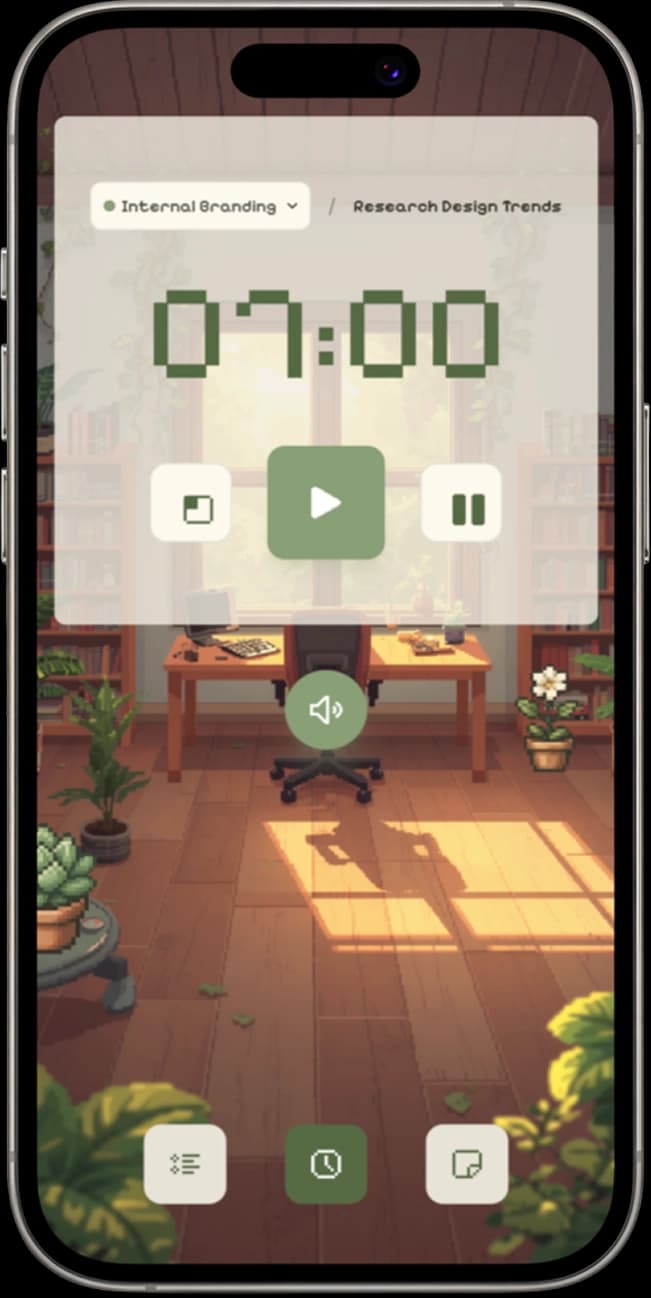
After completing the research and competitive analysis, a clear pattern emerged: most productivity tools focus on helping people organize information, but very few help them consistently take action. Users repeatedly described downloading productivity apps with good intentions, only to abandon them days or weeks later due to complexity, lack of motivation, or overwhelming systems.
The research also revealed that this challenge was not limited to people with ADHD. While neurodivergent users often experience these difficulties more intensely, many neurotypical users struggle with the same issues: procrastination, task avoidance, mental overload, and maintaining long-term consistency.
These findings led to a central design question: How might we create a productivity tool that encourages action without overwhelming the user?
The result was Neki.
What is Neki?
Neki is a productivity and focus application designed to help users transform intention into action. Rather than competing through more features, deeper customization, or aggressive gamification, Neki focuses on creating a simple, calming, and sustainable experience that supports users throughout the entire process of getting things done.
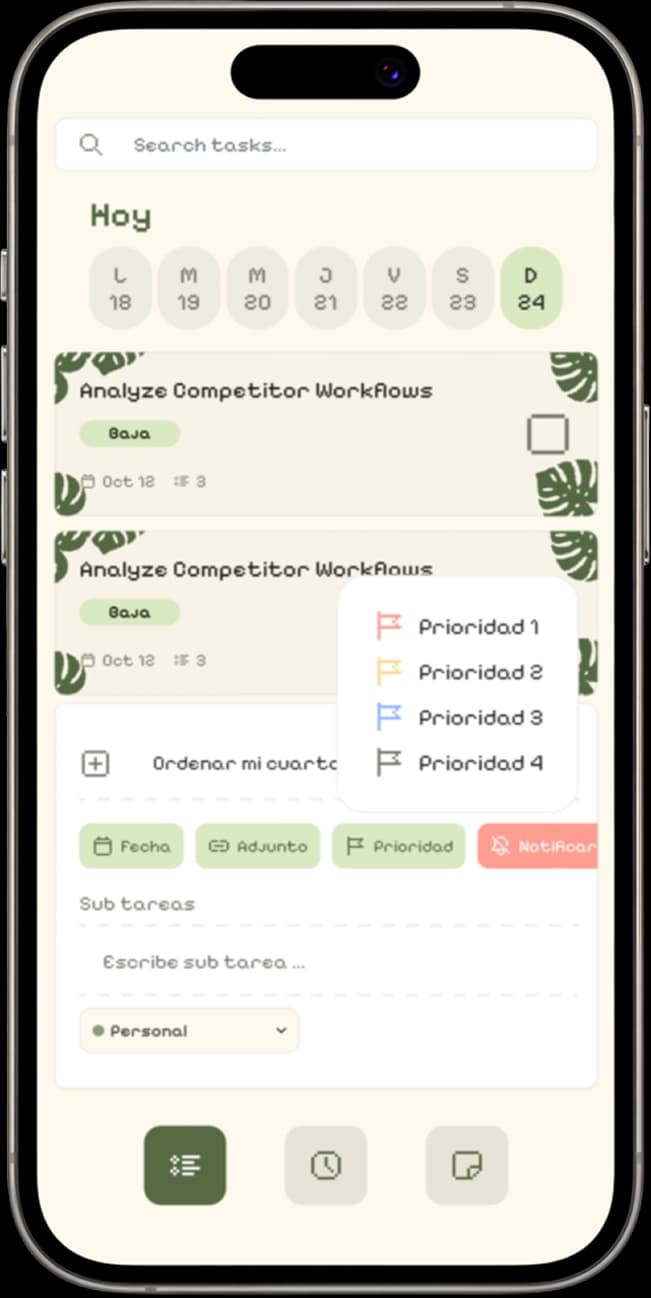
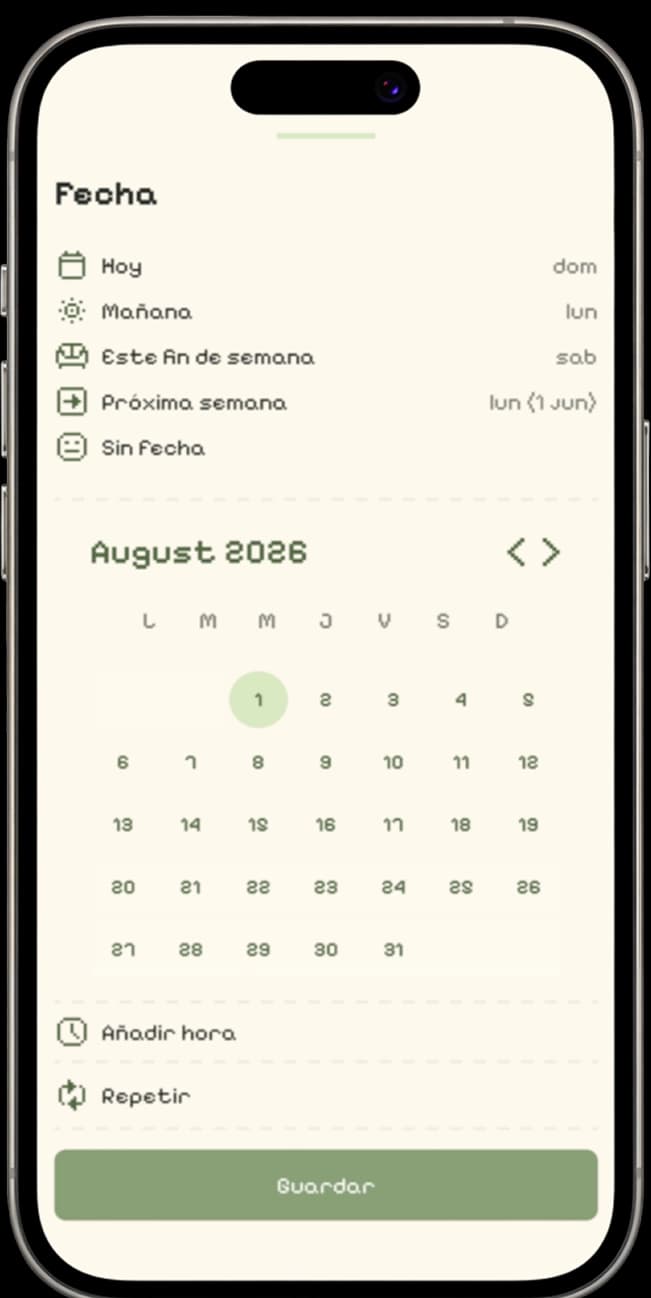
At its core, Neki combines two complementary experiences: task management and focused work sessions. Users can quickly organize responsibilities, break larger goals into manageable tasks, and transition directly into a distraction-free focus session without switching between multiple applications.
Every design decision was guided by a single principle: reduce unnecessary friction while preserving meaningful engagement. The goal was not to make productivity effortless, but to make getting started feel achievable.
To bring this concept to life, the solution was structured around two primary modules: the Task Module and the Pomodoro Module.
User persona

Pablo Banderas — "The Overwhelmed Starter"
Pablo is a 22 year old university student from Cancún, México, balancing academic responsibilities, personal projects, and social commitments. Like many young adults, he has experimented with numerous productivity tools ranging from calendars and planners to highly customizable platforms such as Notion. While these tools initially feel promising, most are eventually abandoned because they require too much setup, become difficult to maintain, or fail to provide enough value to justify returning consistently.
Details
- 22 years old
- Lives in Cancún, México
- University student
- Manages academic, personal, and social responsibilities
- Heavy smartphone user
- Has experience using multiple productivity and task management apps
Use Case
- Needs a simple way to organize assignments, deadlines, and personal tasks
- Frequently starts productivity systems but struggles to maintain them long term
- Relies on memory, notes, or trusted people to remember important commitments
- Prefers tools that are quick to set up and easy to revisit
- Values visual clarity and calm interfaces over feature-heavy dashboards
- Wants to feel progress without being pressured by streaks, rankings, or guilt-based reminders
Goals
- Stay organized without creating additional mental overhead
- Build a sustainable productivity habit
- Break large tasks into manageable actions
- Maintain focus on current priorities
- Feel a sense of accomplishment at the end of the day
Frustrations
- Overly complex productivity systems
- Endless customization before getting started
- Feature overload and cluttered interfaces
- Productivity apps that rely solely on novelty
- Feeling guilty after missing a day or breaking a streak
Needs
- Fast task capture
- Clear task prioritization
- Integrated focus sessions
- A calming and approachable experience
- Enough structure to stay organized without feeling restricted
Early Iterations / Sketches
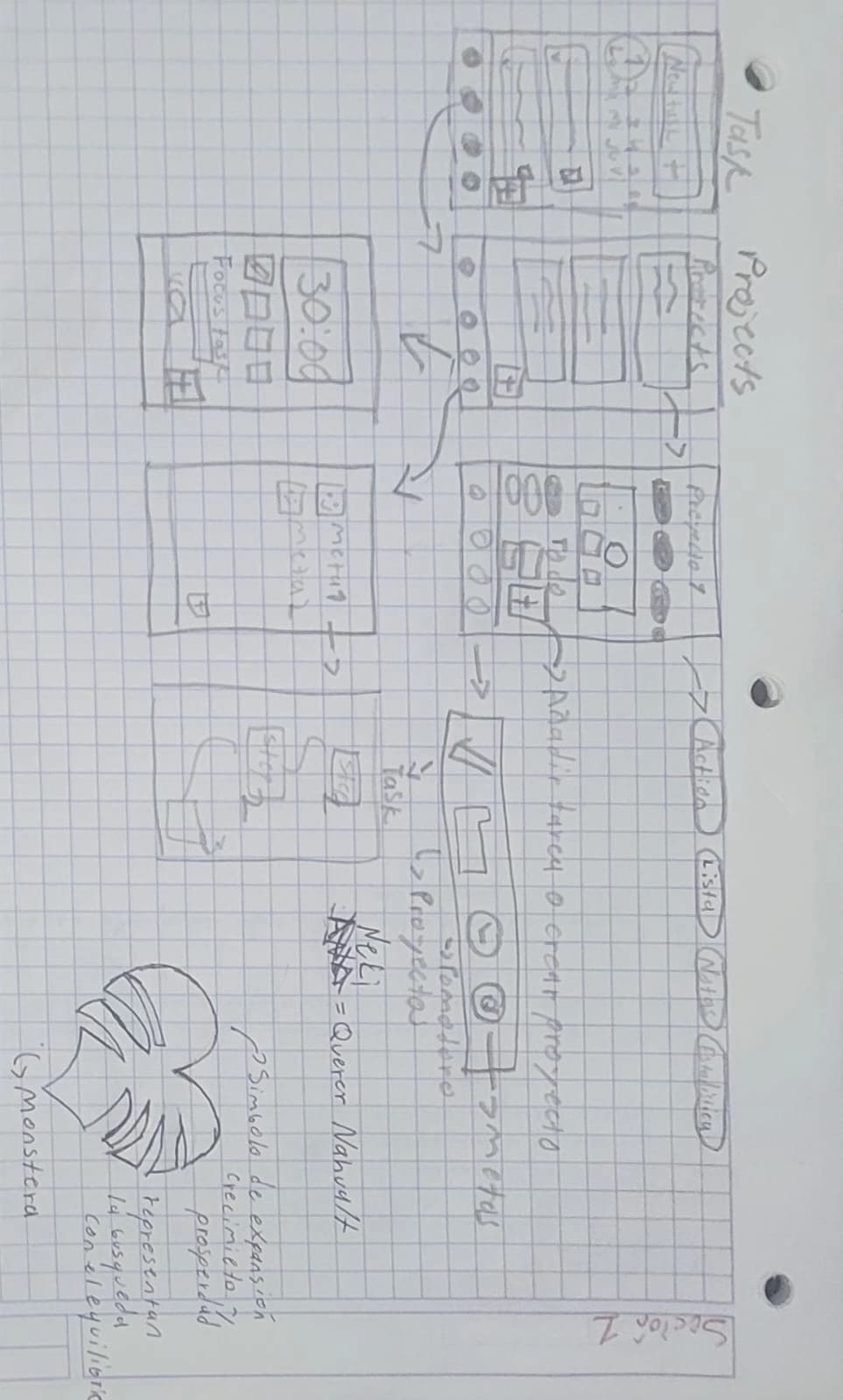
The initial sketches explored different ways to organize tasks, projects, goals, and focus sessions within a single experience. From the beginning, the goal was to create a productivity tool that felt simple and approachable, avoiding the complexity commonly found in existing task management applications.
During this phase, the core structure of Neki began to take shape, including the integration of task management and Pomodoro sessions. The sketches also explored the product's visual identity, leading to the selection of the name Neki and the Monstera leaf symbol, chosen for its associations with growth, balance, and intentional progress.
User flows

The primary goal of this user flow was to create a seamless transition between planning and execution. Based on research findings, the flow was designed to minimize the steps required to organize tasks and start focused work, allowing users to quickly move from intention to action. By integrating task management and Pomodoro sessions into a single experience, Neki reduces friction, encourages consistency, and helps users stay focused on what matters most without feeling overwhelmed by complexity.
Solution
Turning Intention Into Action
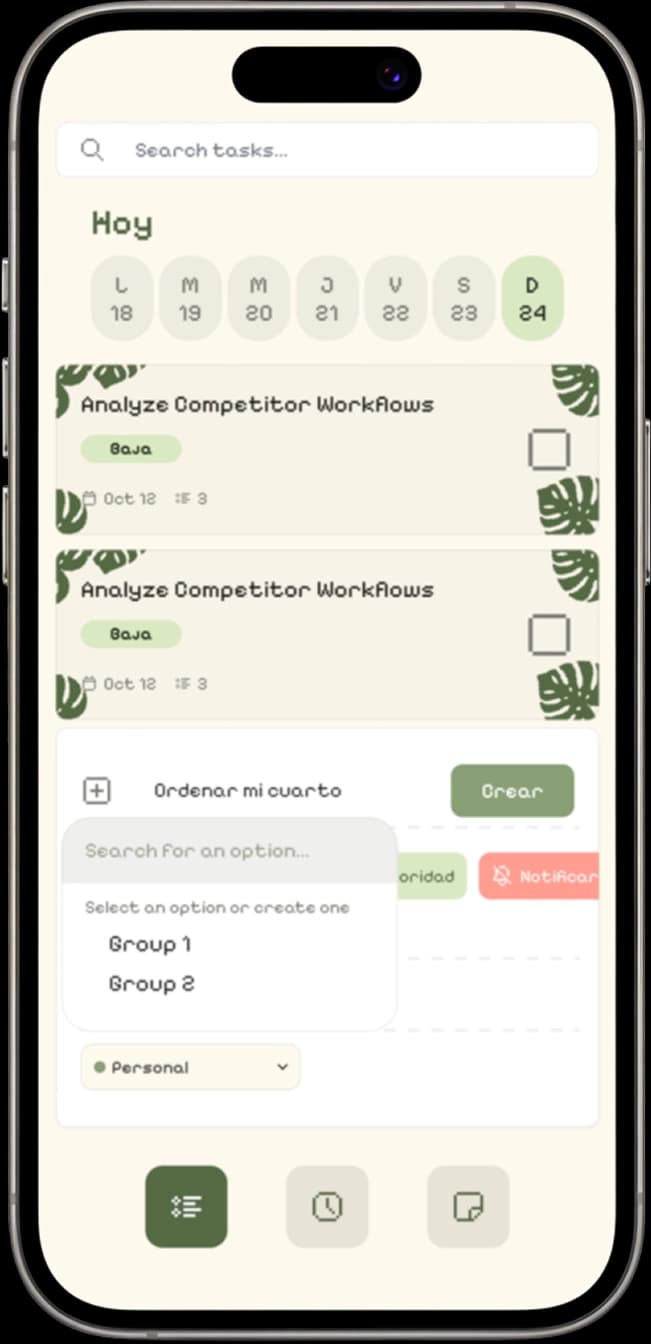
Introducing: Neki
A productivity and focus app designed to help users bridge the gap between planning and execution through a simple task management system and integrated focus sessions.
Why combine tasks and focus sessions?
Research revealed that many users do not struggle with organization itself they struggle with getting started. While most productivity tools focus on storing information, managing projects, or creating complex systems, very few help users transition from deciding what to do to actually doing it.
Neki was designed around this observation. Rather than treating planning and execution as separate activities, the product combines them into a single experience. Users can quickly capture tasks, organize priorities, and immediately begin a focus session without switching between multiple tools or workflows.
The Solution
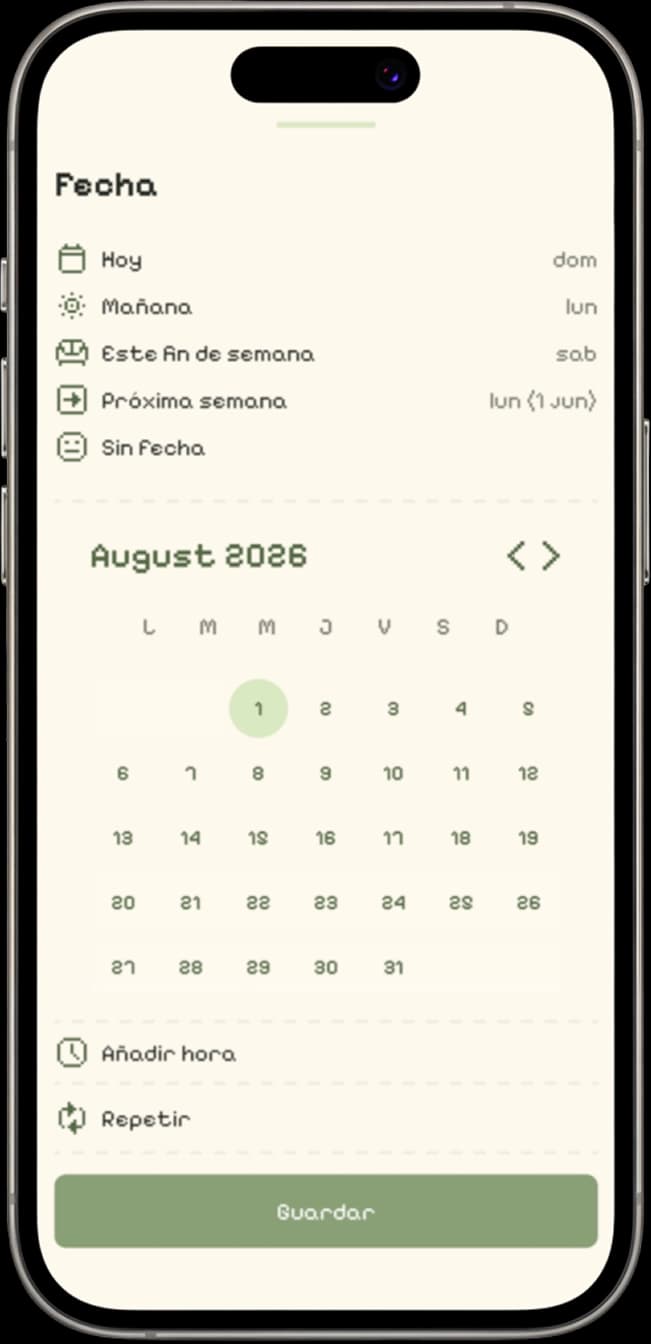
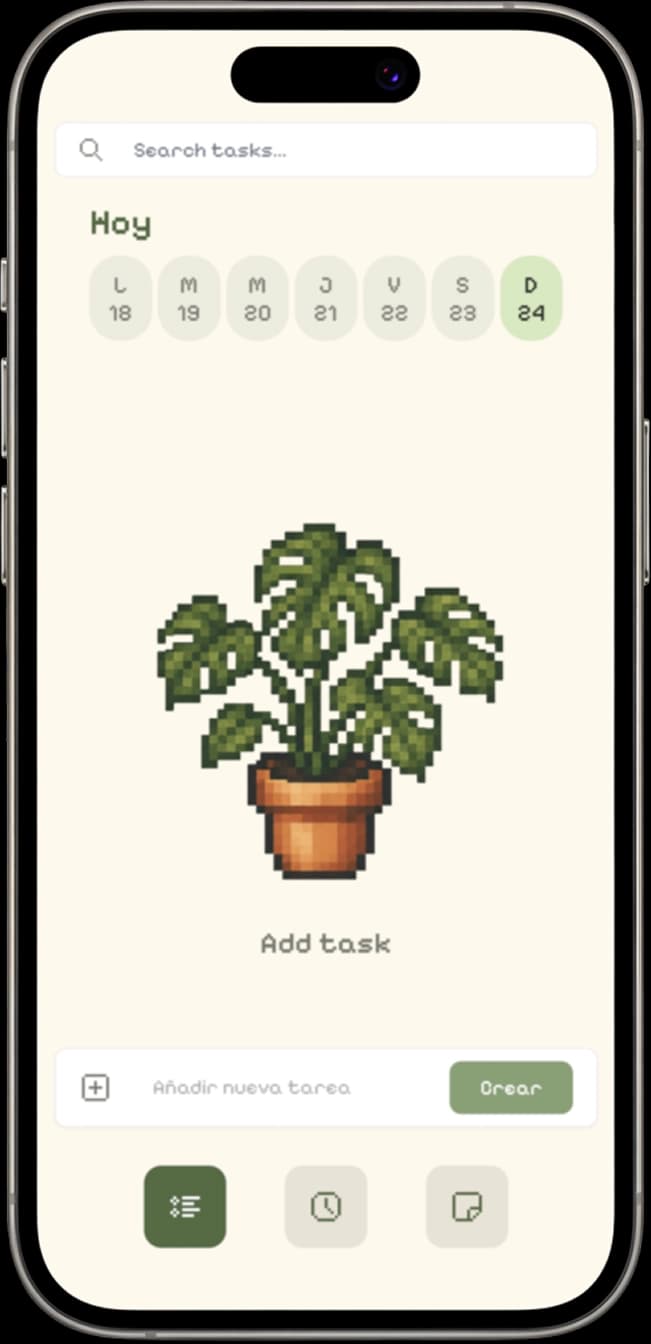
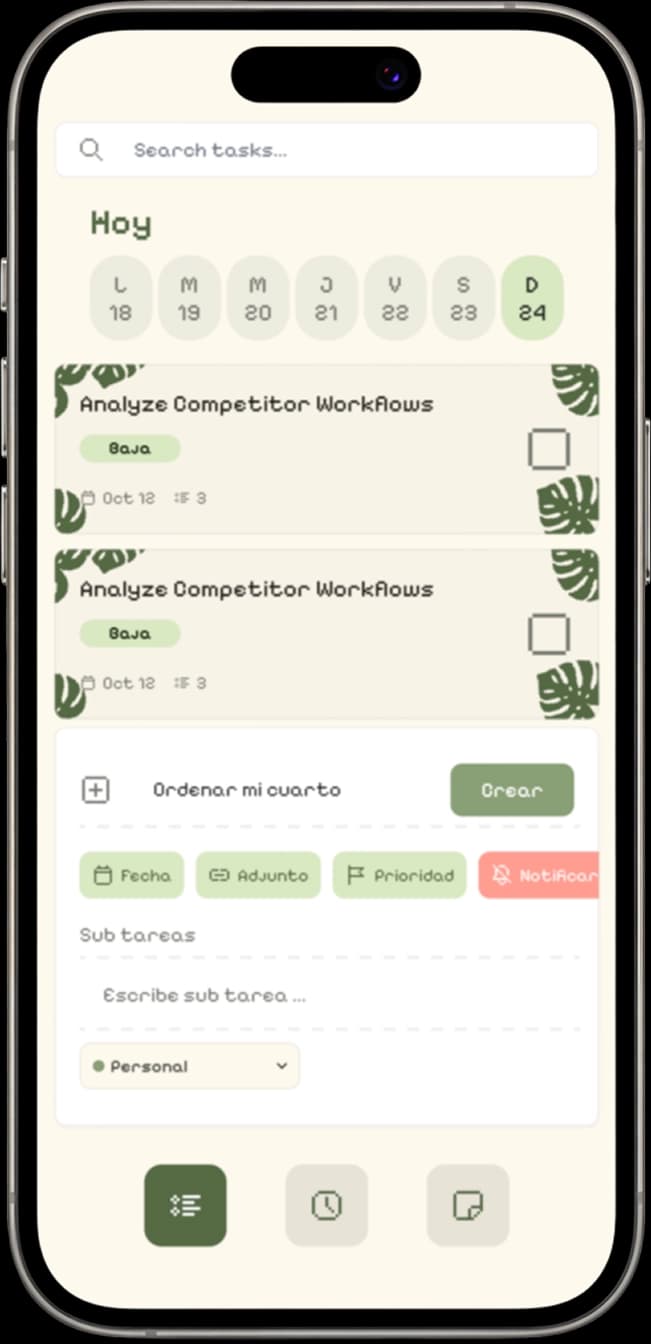
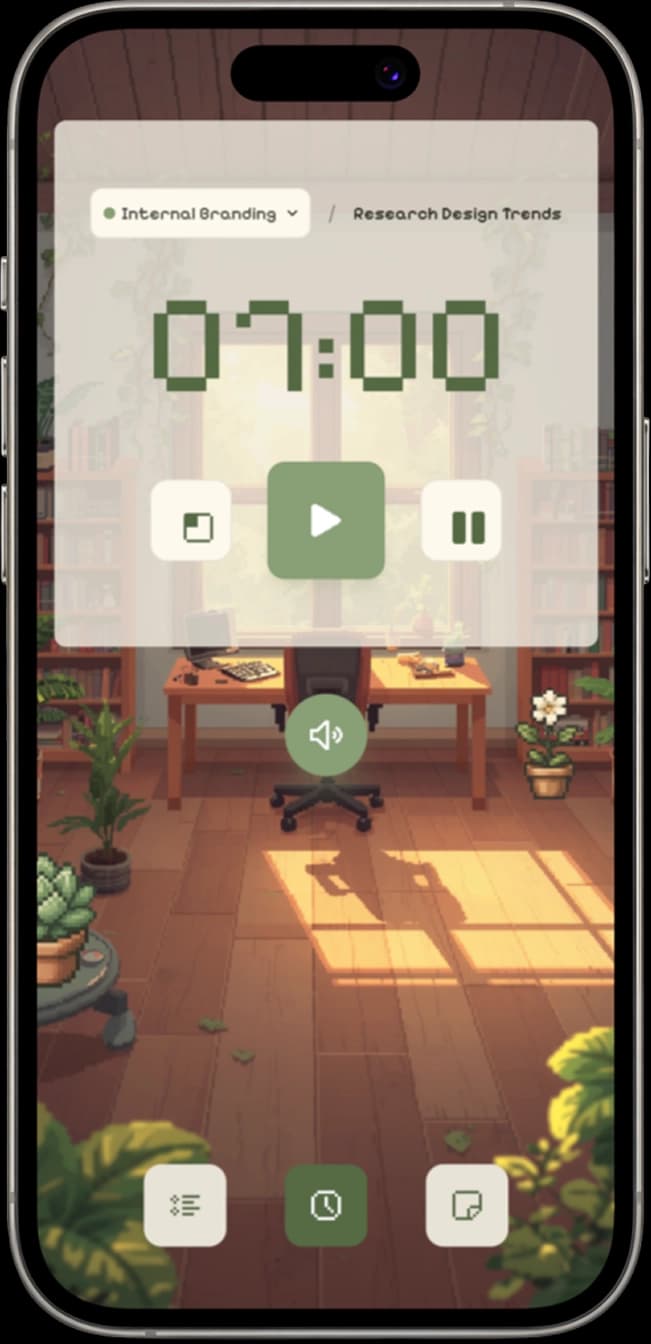
Neki is built around two core experiences: a Task Module and a Pomodoro Module.
The Task Module allows users to quickly create, organize, and manage tasks with minimal friction. Instead of overwhelming users with complex dashboards, the experience focuses on clarity and helping users identify what matters today.
The Pomodoro Module extends this experience by allowing users to select a task and immediately transition into a focused work session. By connecting focus sessions directly to tasks, the product creates a stronger sense of intention and encourages follow-through on commitments.
Key Research Insights
- Users often abandon productivity tools because they become too complex or difficult to maintain.
- Task initiation is frequently a bigger challenge than organization itself.
- Long-term engagement depends more on usefulness and consistency than novelty.
- Reducing unnecessary friction increases the likelihood that users will return to a tool regularly.
- Productivity systems should support users without relying on guilt, pressure, or excessive gamification.
Branding
Icon / Logo
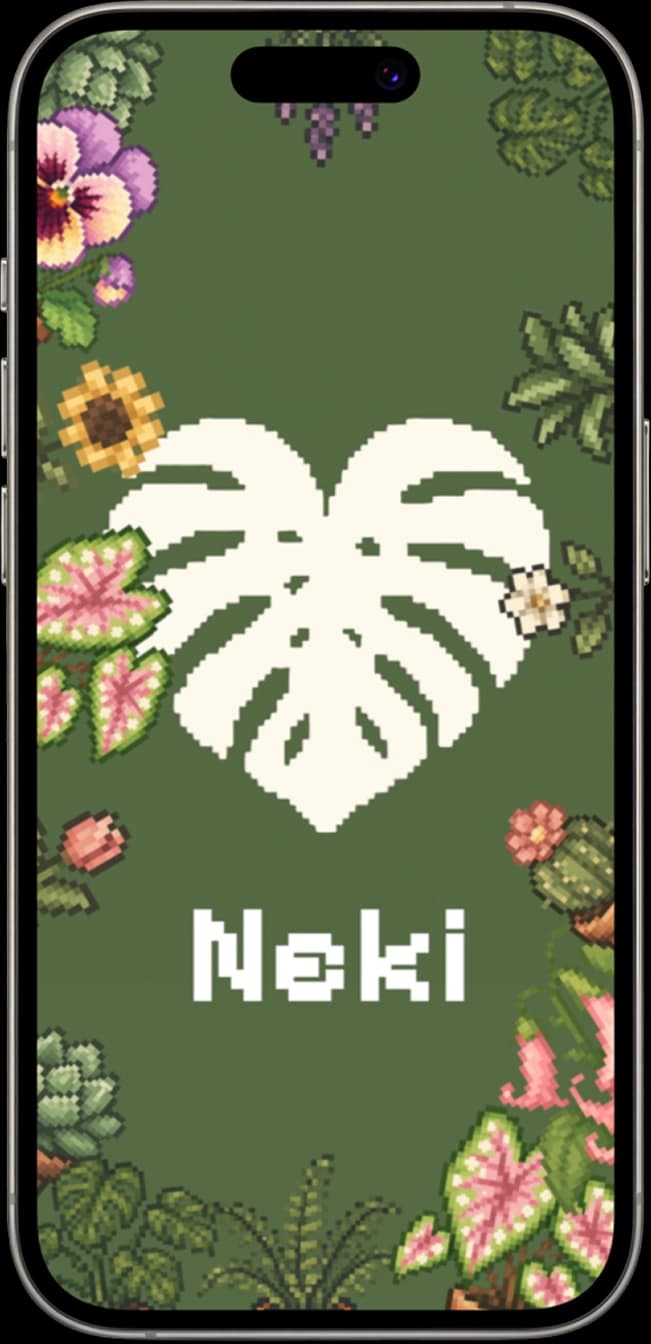
The Neki icon features a Monstera leaf rendered in a pixel-art style. The Monstera was chosen because it is commonly associated with growth, balance, and prosperity ideas that closely align with the product's purpose of helping users make consistent progress over time.
The pixel-art treatment connects directly to the visual language used throughout the application, particularly within the focus and Pomodoro experiences. This creates a cohesive identity while giving the product a distinctive personality that stands apart from the minimal, corporate aesthetic common among productivity apps.
Name
The name Neki comes from the Nahuatl word neki, meaning "to want" or "to desire." During the research phase, a recurring theme emerged: most users already know what they want to accomplish they simply struggle with turning that intention into action.
Because of this, the name became a natural representation of the product's purpose. Rather than focusing on productivity, efficiency, or performance, Neki focuses on intention. The name is short, memorable, culturally rooted, and serves as a reminder that every task begins with the simple desire to start.
Colors
The color palette was inspired by natural environments and calm workspaces. Productivity apps often rely on bright colors, aggressive notifications, and high-contrast interfaces designed to demand attention. Neki takes the opposite approach.
Deep olive green serves as the primary brand color, representing focus, growth, and stability. Supporting neutral tones create visual warmth while maintaining readability and accessibility. Together, these colors create a calm environment that encourages users to return to the app without associating productivity with stress, guilt, or pressure.
Typography
A
Pixelify Sans Regular
Pixelify Sans Medium
Pixelify Sans SemiBold
Pixelify Sans Bold
Pixelify Sans was selected as the primary typeface for its ability to reinforce the product's pixel-art aesthetic while remaining highly legible across the interface. The typeface creates a visual connection between the branding, the icon, and the application's focus environments, helping the entire experience feel cohesive.
Its geometric structure and retro-inspired appearance add personality without sacrificing readability, allowing Neki to feel approachable and distinctive while still functioning effectively as a productivity tool.
Design System in Figma
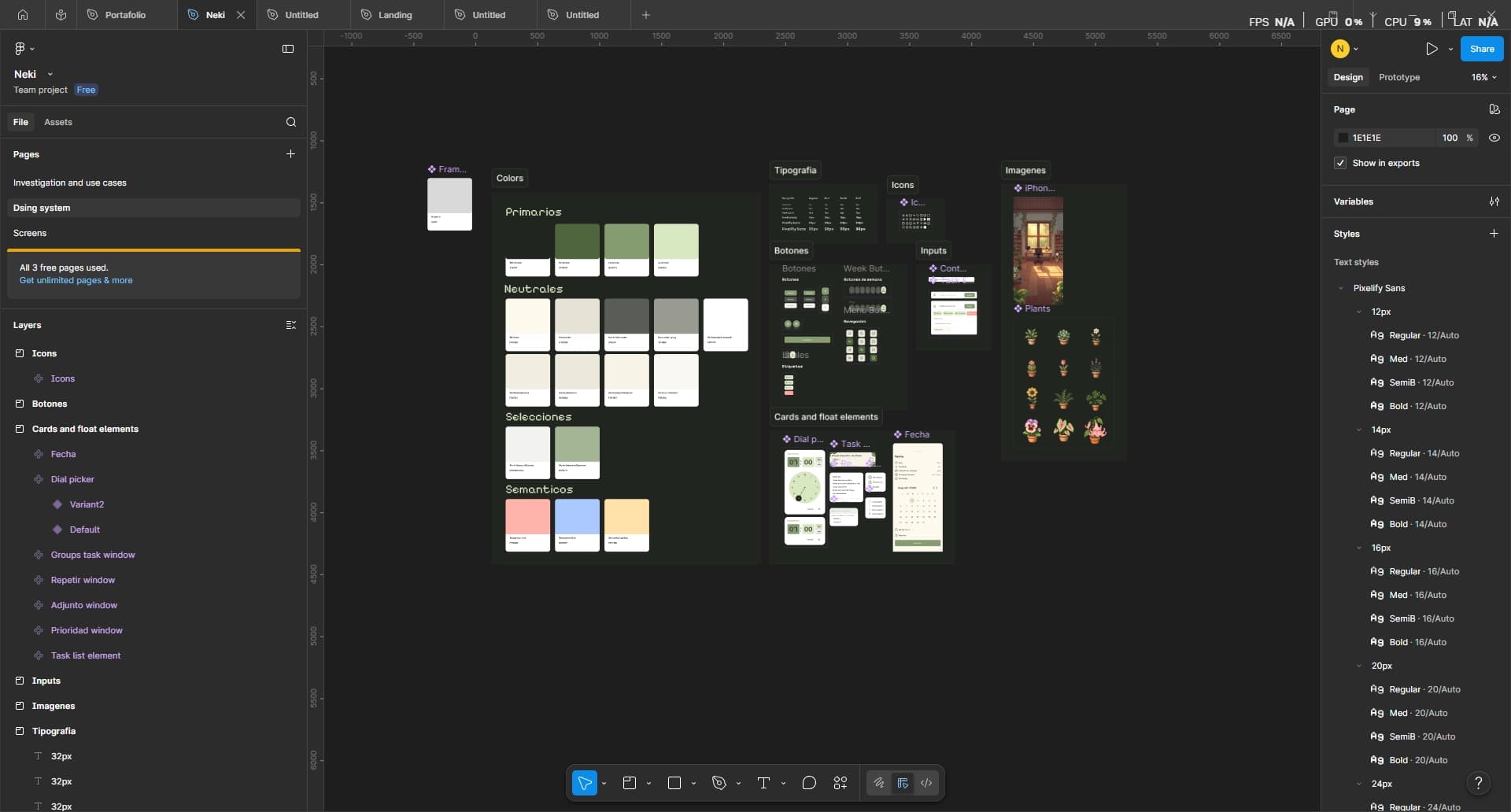
Building Neki required more than designing individual screens it required creating a consistent system that could scale alongside the product. Because the experience is centered around reducing cognitive load, consistency became one of the most important design considerations. Every component, color, and interaction needed to feel familiar regardless of where users were in the application.
Creating a design system early in the process allowed me to work faster, maintain visual consistency, and make design decisions more intentionally. Rather than redesigning elements for every screen, reusable components such as task cards, input fields, navigation elements, buttons, and Pomodoro controls could be shared across the entire product. This approach not only streamlined the design process but also ensured that every new screen felt like a natural extension of the existing experience.
Design System
Design Principles
Every component and interaction was guided by four core principles:
- Humanity — Design for real people, not idealized productive users.
- Intention — Every element should help users move toward action.
- Calm — Reduce visual clutter and unnecessary distractions.
- Consistency — Familiar experiences reduce cognitive effort and encourage long-term use.
App Screens
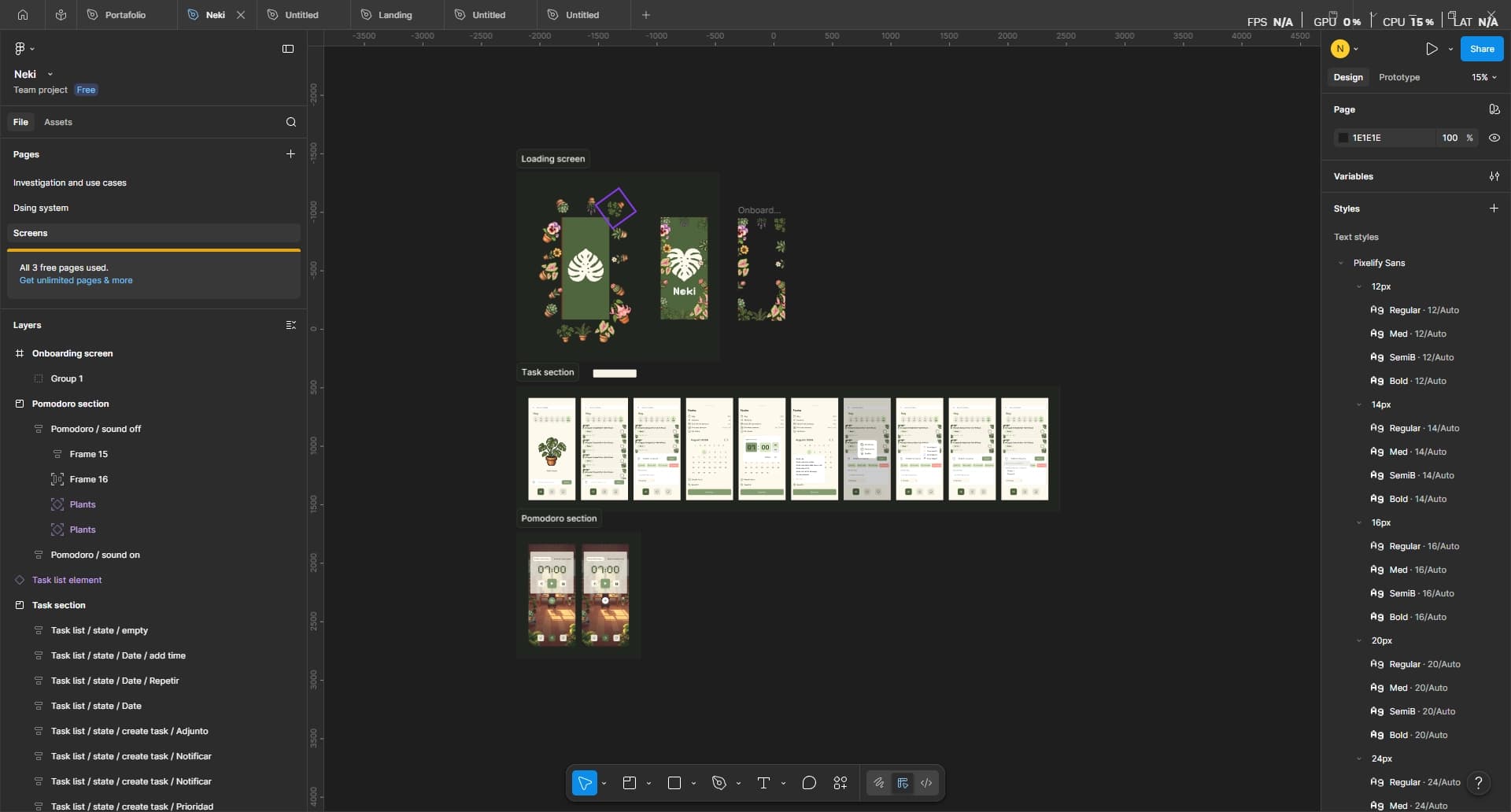
Somewhere along the way, this project became much bigger than I originally planned. A simple productivity app somehow became a full branding exercise, a research project, a design system, and eventually a functional MVP. Was all of that necessary? Probably not. Was it fun? Absolutely.
Creating a design system gave me a playground to experiment, refine ideas, and keep everything connected as the project grew. More importantly, it let me focus on solving problems instead of redesigning the same button for the tenth time. Looking back, Neki became one of those projects where curiosity kept adding "just one more thing" until suddenly there was an entire product ecosystem sitting inside Figma.
Reflexion
Looking back, Neki is easily one of the most enjoyable projects I have worked on.
What started as a simple academic assignment quickly evolved into something much larger. I initially approached the project like any other productivity app, intending to design a tool specifically for neurodivergent users. However, as the research progressed, curiosity began taking over. I found myself asking a simple question: if productivity apps are supposed to help people stay organized, why do I abandon almost every one of them?
That question led me down a rabbit hole of research that completely changed the direction of the project. I learned more about ADHD, motivation, dopamine, executive function, and productivity than I ever expected. More importantly, I realized that many of the problems commonly associated with ADHD also affect neurotypical users, just in different ways. It challenged many assumptions I had about productivity tools and made me question how much automation is actually helpful. While AI-powered planning and automatic organization can be convenient, removing too much intentionality from the process can also remove a person's sense of ownership and agency.
One of the things I enjoyed most was seeing how every phase of the project informed the next. Research influenced the branding, branding influenced the interface, and the interface influenced development. The entire process felt surprisingly fluid, allowing me to make decisions with confidence rather than relying on assumptions.
Of course, there is still plenty I would like to improve. Productivity is highly personal, and if I continue developing Neki, the next step would be conducting interviews with a wider range of users and validating the product through usability testing. I would also love to expand the feature set with tools such as notes and other lightweight productivity features while maintaining the simplicity that defines the product today.
As for what exceeded my expectations, the Pomodoro experience became one of my favorite parts of the project, and I am particularly proud of how cohesive the visual design feels considering the entire project was researched, designed, and developed within four days.
Most importantly, Neki became something more than a productivity app. It became a reflection of how I like to approach design: following curiosity, questioning assumptions, and going deeper than what is strictly required. If there is one thing I hope people take away from this case study, it is that intention matters. Neki was built around that idea, and in many ways, so was this project.
And no, this is definitely not the last time you'll see Neki. This case study will continue to evolve alongside the product itself.